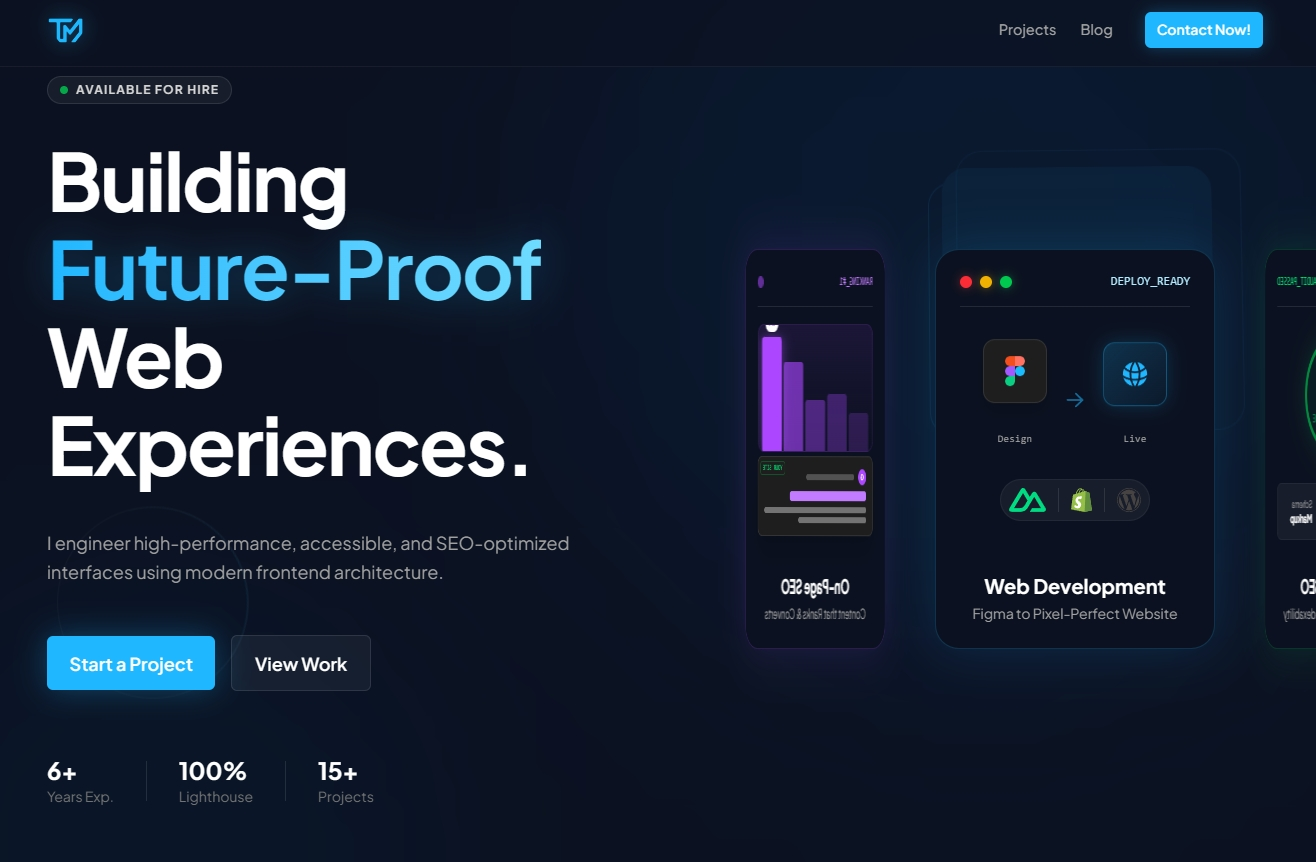
Web Development for Shopify, WordPress, and Custom Builds
A lot of web development and SEO happen in separate silos, a developer builds the site, then an SEO specialist comes in later to fix what the build broke. I do both, which means the sites I build don't need that second pass.
Core Expertise & Offerings
Shopify Development
Custom Liquid work, storefront revamps, and interface elements like scroll-based navigation, custom filtering, or mega menus that aren't available out of the box.
WordPress Development
Custom fields with ACF, theme customization, and cleanup work on sites where multiple plugins are overlapping, slowing things down, or conflicting with each other.
Custom Web Builds
Laravel or Express on the backend, Nuxt or Vue on the frontend, chosen for speed without sacrificing performance or SEO fundamentals.
Development Built with SEO in Mind
Most technical SEO issues come from decisions made during development. Building it right the first time avoids a second round of fixes later.
Shopify Development
Custom theme work, Liquid development, and full storefront revamps. This covers cleaning up bloated third-party app code, and building custom interface elements that aren't available out of the box, scroll-based navigation, custom filtering, mega menus.
If your store feels slow, has too many apps installed, or the design no longer represents the brand, this is usually where I start, an audit first, then the actual build.
WordPress Development
Custom development using ACF (Advanced Custom Fields), theme customization, and plugin conflict resolution. This is the platform I use most for content-heavy and service-based sites, product pages that need structured content without a full custom build, blog architecture that supports SEO instead of fighting it, and cleanup work on sites where multiple plugins are overlapping and slowing things down.
Custom Web Builds
For projects that need more than a theme or CMS can offer: Laravel or Express on the backend, Nuxt or Vue on the frontend, Bun where build speed matters. This is the stack I use for portfolio sites, internal tools, and product builds, chosen because it allows moving fast without sacrificing control over performance or SEO fundamentals.
Typical projects in this category: landing pages with specific integrations (payment gateways, WhatsApp API, booking systems), internal dashboards for business operations, or small-to-medium web applications that don't fit well into a CMS or page builder.
Why Development and SEO Together
This isn't just an added bonus, it's what separates how I work from most developers. Most technical SEO issues I find when auditing a client's site aren't problems that appeared later, they're decisions made wrong during development. URL structure never thought through, canonicals never set, images never optimized, all of it is far more expensive to fix after launch than to prevent while building.
How I Work
Every project starts with a clear scope: what the site needs to do for your business, not just what it should look like. I build with modern tooling, including AI-assisted development where it speeds up implementation, but every architectural decision, database structure, and business logic is one I design and understand myself, not one I hand off blindly to a tool.
Typical process:
- Requirements and scope discussion
- Technical planning, with SEO considered from the start, not after
- Development with regular progress updates
- Testing and review together before going live
- Post-launch support for fixes or small adjustments