
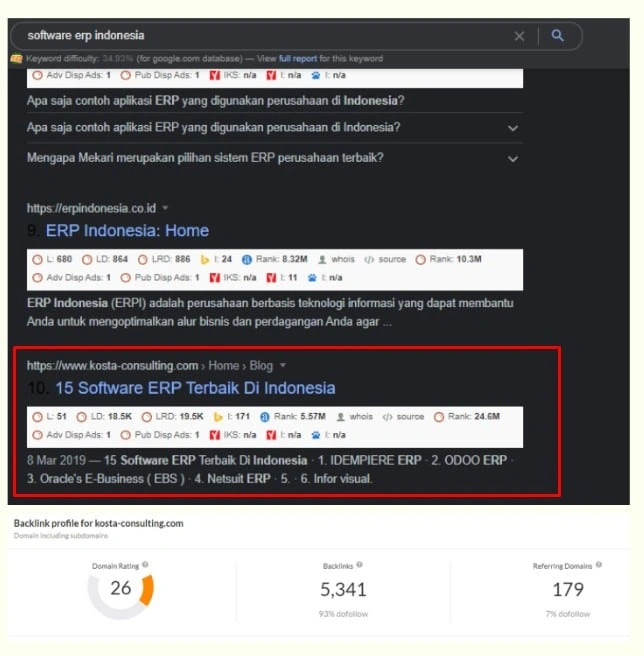
SEO & SEM Industri ERP
Meningkatkan peringkat pencarian dari halaman 15 ke posisi Top 1 untuk kata kunci software ERP. Mengelola Google Ads dengan anggaran bulanan $1.000, mencapai tingkat konversi 28,4% dan 100+ prospek B2B.
Audit teknis bertarget dan penyelarasan SEO-SEM mendorong tingkat konversi 28,4% melalui optimasi pencarian terintegrasi.
Tantangan
Sebuah perusahaan konsultan ERP menghadapi tantangan signifikan di pasar software enterprise yang sangat kompetitif:
-
Visibilitas Sangat Rendah: Kata kunci berada di halaman 15, hampir tidak terlihat oleh calon klien
-
Trafik Organik Terbatas: Otoritas domain (domain authority) yang rendah menghasilkan jangkauan organik yang minimal
-
Niche Kompleks: Software enterprise B2B membutuhkan strategi kata kunci bertarget dengan niat pencarian (search intent) yang tinggi
-
Keterbatasan Anggaran: Perlu menyeimbangkan pengeluaran SEM sambil mempertahankan tingkat konversi yang tinggi
-
Siklus Penjualan Panjang: Mengonversi klien enterprise membutuhkan visibilitas dan kredibilitas yang berkelanjutan
Objektif
-
Meningkatkan peringkat mesin pencari untuk kata kunci terkait ERP
-
Menghasilkan prospek B2B berkualitas melalui kampanye SEM yang ditargetkan
-
Meningkatkan visibilitas merek dan trafik website dari audiens dengan niat pencarian tinggi
-
Mengoptimalkan alokasi anggaran untuk ROI maksimum
Solusi
Saya mengembangkan strategi dua arah yang menggabungkan peningkatan SEO yang agresif dengan kampanye Google Ads yang ditargetkan secara presisi.
Strategi SEO
Fondasi Teknis
-
Melakukan audit SEO mendalam, mengidentifikasi masalah teknis kritis seperti tautan rusak (broken links) dan kecepatan halaman yang lambat
-
Mengoptimalkan metadata, struktur heading (H1, H2, H3) untuk kejelasan semantik
-
Membuat XML sitemap komprehensif untuk meningkatkan crawlability
-
Memperbaiki 50+ tautan rusak dan mengoptimalkan skor kesehatan teknis website
-
Mengurangi waktu muat halaman sebesar 30%, meningkatkan pengalaman pengguna
Strategi Konten
-
Mengembangkan content clusters yang menargetkan kata kunci ERP berniat tinggi seperti “software ERP Indonesia”, “ERP iDempiere”, dan “ERP open-source”
-
Membuat pillar pages untuk topik utama dengan dukungan konten cluster
-
Fokus pada kata kunci long-tail dengan niat komersial tinggi
-
Mengoptimalkan halaman yang ada untuk peluang featured snippet
SEO Off-Page
-
Membangun backlink berkualitas tinggi dari website yang relevan dengan industri
-
Membuat dan mendistribusikan konten thought leadership melalui kemitraan, blog, dan guest post
-
Menargetkan publikasi pengembangan software dan teknologi bisnis
-
Mendapatkan penyebutan (mentions) dari forum dan komunitas industri ERP
Strategi SEM
Struktur Kampanye Mengelola kampanye Google Ads dengan anggaran bulanan $1.000, membuat tiga kampanye utama:
-
Kampanye Lead Generation
-
Menargetkan kata kunci bottom-of-funnel untuk pertanyaan ERP
-
Fokus pada kata kunci dengan niat komersial seperti “harga software ERP”, “implementasi ERP”
-
Dioptimalkan untuk pengiriman formulir dan permintaan demo
-
-
Kampanye Pembentukan Audiens
-
Remarketing ke pengunjung website
-
Membangun audiens kustom untuk pertumbuhan organik di masa depan
-
Membangun daftar email melalui penawaran konten
-
-
Kampanye Kesadaran Kata Kunci
-
Konten edukasi yang menargetkan prospek mid-funnel
-
Kata kunci spesifik industri untuk membangun thought leadership
-
Promosi blog dan sumber daya
-
Taktik Optimasi
-
Melakukan A/B testing ekstensif pada teks iklan dan landing page untuk meningkatkan rasio klik-tayang (CTR) dan tingkat konversi
-
Menerapkan daftar kata kunci negatif (negative keywords) untuk mengurangi pengeluaran yang sia-sia
-
Mengoptimalkan strategi penawaran (bidding) untuk berbagai tujuan kampanye
-
Membuat landing page yang sangat relevan untuk setiap grup iklan
-
Menyiapkan pelacakan konversi untuk berbagai titik sentuh (touchpoints)
Pelacakan & Analitik
Kerangka Pengukuran
-
Menerapkan Google Tag Manager (GTM) untuk melacak konversi, klik tombol, dan pengiriman formulir
-
Membuat parameter UTM kustom untuk menganalisis sumber trafik dan menyempurnakan penargetan kampanye
-
Menyiapkan goals di Google Analytics untuk kualifikasi prospek
-
Memantau kinerja kampanye menggunakan Google Analytics dan SEMrush
-
Membangun dasbor kustom untuk pemantauan kinerja real-time
Hasil & Metrik Utama
Kinerja SEO
Pencapaian Peringkat
-
Meningkatkan peringkat untuk kata kunci persaingan tinggi seperti “ERP open-source Indonesia” dari halaman 15 ke halaman 1
-
Mencapai posisi 3 besar untuk beberapa kata kunci target
-
Meningkatkan visibilitas untuk 50+ istilah pencarian terkait ERP yang relevan
Pertumbuhan Trafik
-
Meningkatkan trafik website sebesar 50% dalam 6 bulan
-
Meningkatkan rasio klik-tayang (CTR) organik dengan mengoptimalkan deskripsi meta
-
Mengurangi rasio pantulan (bounce rate) melalui relevansi konten yang lebih baik
Kinerja SEM
Keberhasilan Konversi
-
Mencapai tingkat konversi keseluruhan 28,4% dari kampanye SEM
-
Menghasilkan 100+ prospek B2B yang memenuhi syarat selama durasi proyek
-
Grup iklan untuk “SCM” (Supply Chain Management) mencapai tingkat konversi 60%
-
Mempertahankan kualitas prospek yang tinggi dengan konversi tindak lanjut yang konsisten ke penjualan
Optimasi Anggaran
-
Mengurangi biaya per prospek (CPL) sebesar 20% sambil mempertahankan ROI yang tinggi
-
Meningkatkan Skor Kualitas di seluruh grup iklan, mengurangi BPK (CPC)
-
Mencapai rata-rata BPK 30% di bawah tolok ukur industri
-
Mempertahankan ROAS (Return on Ad Spend) yang menguntungkan di sepanjang kampanye
Peningkatan Teknis
-
Memperbaiki 50+ tautan rusak dan mengoptimalkan skor kesehatan teknis website
-
Mengurangi waktu muat halaman sebesar 30%, meningkatkan pengalaman pengguna
-
Mencapai skor Google PageSpeed Insights 90+
-
Meningkatkan daya tanggap seluler dan Core Web Vitals
Alat & Teknologi yang Digunakan
-
Alat SEO: SEMrush, Ahrefs, Screaming Frog, Google Search Console
-
Platform SEM: Google Ads, Google Keyword Planner
-
Analitik: Google Analytics 4, Google Tag Manager
-
Landing Page: Dibuat kustom dengan optimasi konversi
-
A/B Testing: Google Optimize untuk varian landing page
Pembelajaran Utama
Apa yang Bekerja Paling Baik
-
Grup Iklan Sangat Bertarget: Memecah kampanye berdasarkan modul ERP spesifik (SCM, Keuangan, Manufaktur) menghasilkan tingkat konversi yang jauh lebih tinggi
-
Sinergi Konten + Iklan: Menggabungkan pembuatan konten SEO dengan iklan yang ditargetkan mempercepat visibilitas sementara peringkat organik meningkat
-
Kata Kunci Negatif: Memfilter secara agresif pencarian berniat rendah - secara dramatis meningkatkan efisiensi anggaran
-
Relevansi Landing Page: Membuat landing page khusus untuk setiap kategori produk meningkatkan Skor Kualitas dan tingkat konversi
Wawasan Strategis
Proyek ini membuktikan bahwa bahkan di pasar B2B yang sangat kompetitif, kombinasi yang dieksekusi dengan baik dari SEO teknis dan SEM strategis dapat memberikan hasil yang luar biasa. Kuncinya adalah memahami perjalanan pembeli dan membuat titik sentuh di setiap tahap.
Tingkat konversi 28,4% secara signifikan melampaui tolok ukur industri (biasanya 2-5% untuk SaaS B2B), menunjukkan pentingnya optimasi landing page dan penargetan audiens yang tepat.