On-Page SEO vs Off-Page SEO: What is the Difference and Why Both Matter
Learn the difference between on-page and off-page SEO, what each covers, and why you need both to rank higher on Google and build long-term organic traffic.
If you have been learning about SEO, you have probably come across the terms on-page and off-page more than a few times. Most people understand that SEO is about getting your website to rank higher on Google, but not everyone knows that there are two very different sides to how that actually works. Getting both right is what separates websites that stay stuck on page 5 from ones that consistently appear at the top.
Quick answer
On-page SEO is everything you do on your own website: content, keywords, structure, and speed. Off-page SEO is everything that happens outside your website: backlinks, social signals, and mentions across the web. You need both to rank well.
What is On-Page SEO?
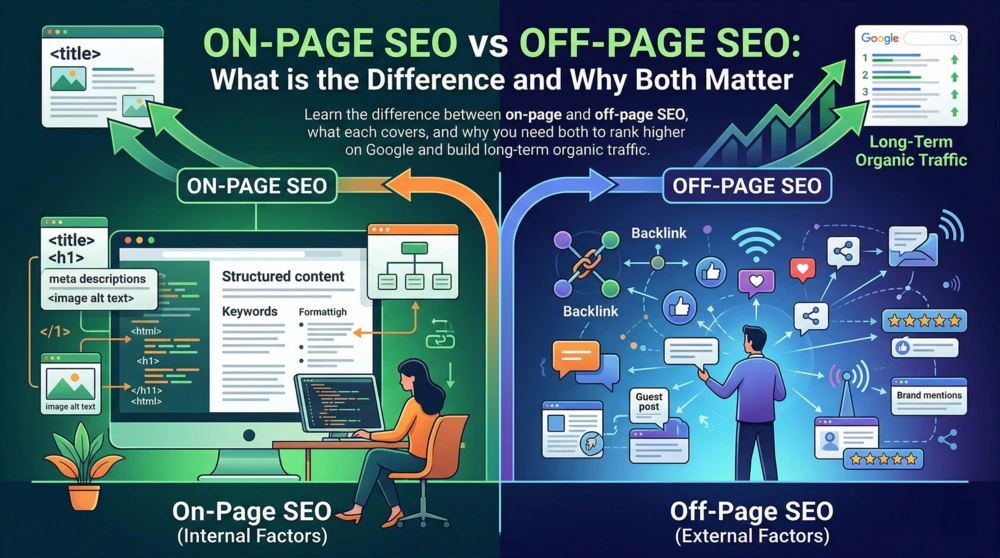
On-page SEO covers all the optimizations you make directly on your website. Think of it as everything within your control, from the words you write to how your pages are structured. The core idea is simple: if your content is high quality and properly structured, search engines have an easier time understanding what your page is about and who it should be shown to.
The main elements that make up on-page SEO include:
-
Title tags and meta tags : the first thing Google reads to understand your page topic.
-
Heading structure (H1, H2, H3) : helps both readers and crawlers navigate your content.
-
URL structure : clean, descriptive URLs rank better and are easier to share.
-
Image alt text : tells search engines what your images contain.
-
Page loading speed : a slow page hurts both rankings and user experience.
-
Website content : the quality, depth, and relevance of what you actually publish.
-
Internal linking : connects your pages together and helps crawlers discover your content.
Keywords play a central role across all of these elements. The goal is to place your target keywords naturally in these areas without forcing them. Google is smart enough to detect keyword stuffing and it will actively work against your rankings if you overdo it. The key is to write for people first, then make sure the technical signals are in the right places.

What is Off-Page SEO?
Off-page SEO is everything that happens outside your website that still influences where you rank. The most important factor here is backlinks, which are links from other websites pointing to yours. When a reputable site links to your content, Google treats it as a vote of confidence. The more quality backlinks you have, the more authority your site builds over time.
But off-page SEO is not just about backlinks. Other channels that contribute to your off-page presence include:
-
Social media accounts (Instagram, Facebook, X/Twitter, LinkedIn) : increase brand visibility and drive traffic.
-
Online forums and communities (Reddit, Quora) : sharing useful content builds authority and referral traffic.
-
Social bookmarking sites : platforms where users save and share links.
-
Email marketing : distributes your content to an existing audience and drives repeat visits.
-
Blog commenting and community engagement : leaving genuine, helpful contributions on relevant sites builds presence.
-
Guest posting and article contributions : writing for other publications earns backlinks and expands your reach.
Off-page SEO is essentially about building your reputation across the internet. It takes more time than on-page work because you are relying on other people and platforms, but the long-term payoff is significant. A website with strong off-page signals is much harder for competitors to displace from the top rankings.
On-Page vs Off-Page: A Side by Side Look
ON-PAGE SEO
-
Within your control
-
Content quality and structure
-
Keywords and headings
-
Page speed and UX
-
Internal links
-
Schema markup
-
Results faster to see
OFF-PAGE SEO
-
Happens outside your site
-
Backlinks from other sites
-
Social media presence
-
Brand mentions and PR
-
Guest posting
-
Forum and community activity
-
Takes longer, lasts longer
Which One is More Important?
Both. That is the honest answer. On-page SEO is your foundation. Without it, no amount of backlinks will save a page that is slow, poorly written, or has no clear structure. Off-page SEO is what gives your site authority and trust in the eyes of search engines. Without it, even a perfectly optimized page will struggle to outrank competitors who have been building links for years.
A good way to think about it is this: on-page SEO gets you ready to rank, off-page SEO is what pushes you there. Most websites that consistently appear at the top of search results have invested seriously in both over time.
If you are just starting out, focus on getting your on-page fundamentals right first. Good content, clean structure, fast loading, proper keyword placement. Then start building your off-page presence through consistent content distribution, social activity, and earning links from relevant sources. Done properly, the results compound and the traffic you build becomes one of the most sustainable channels your business has.

Marshal Gasong
Digital Marketing Specialist and Web Developer with 8 years of experience in SEO, technical audits, and full-stack development. Helped businesses rank on page 1, shipped SaaS products used by thousands, and driven real revenue through search. Currently available for freelance work and open to full-time opportunities.